 Melbourne, Australia
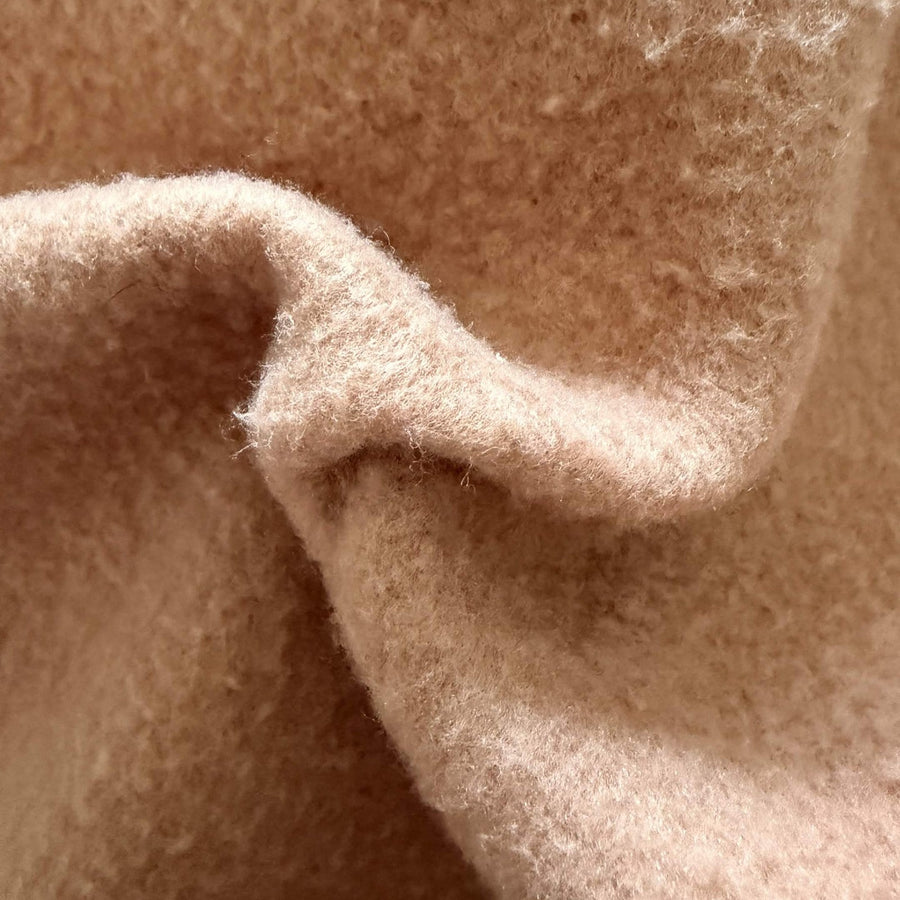
Almost every hoodie listing online quotes a gsm figure, and almost none of them explain it. Here is the short version, because it is the single most useful number when you are trying to work out whether something is worth the money.
What gsm measures
GSM stands for grams per square metre. Take a one metre by one metre piece of the fabric, weigh it, and that is your number. It is a measure of density, not thickness, though in practice the two track each other closely.
It tells you nothing about quality on its own. A badly made 320gsm hoodie is still a badly made hoodie. But it does tell you what you are physically getting, and it is very hard to fake, which is why it is worth paying attention to.
What the common weights feel like
140 to 180gsm. T-shirt territory. Light, breathable, and you can usually see light through it if you hold it up. Fine for a tee, thin for anything with a hood.
200 to 260gsm. The standard hoodie weight, and where most of the market sits. Comfortable, cheap to produce, and it is the weight that tends to go thin and lose its shape after a season or two of washing.
280 to 340gsm. Heavyweight. It holds its structure, it does not cling, and the shoulders sit where they are supposed to instead of collapsing. It also costs meaningfully more to make, which is why it is less common.
400gsm and up. Specialist territory. Genuinely heavy, often too warm for most of the Australian year.
We build at 320gsm, near the top of the heavyweight range but short of the point where it becomes impractical for a Melbourne spring.
Why heavier costs more
More fabric per garment is the obvious part. The less obvious part is that heavier knits are slower to produce, harder to sew evenly, and less forgiving of a rushed finish. A cheap factory can hide a lot in a 220gsm garment. At 320 the construction is much more exposed.
Why 80/20 and not 100% cotton
Pure cotton feels excellent for about six months. Then it shrinks, the cuffs go slack, and the shape drifts. Adding 20% polyester is not a cost-cutting move at this weight, it is what keeps the garment the same size and shape as the day you bought it.
Go much past 20% and you start losing the softness and breathability that made you want cotton in the first place. 80/20 is the point where you keep the hand feel and get the durability.
What to actually check when buying
Ask for the gsm. If a brand will not tell you, that is usually the answer. Then check the composition, and check whether the weight applies to the whole garment or just the body panel, because that distinction gets quietly skipped fairly often.
Every feel it. set is 320gsm 80/20 cotton fleece with a soft brushed inside, hoodie and joggers both, and they are sized to match so one size covers the set. Measurements for every size are on the size guide.